

Anthony Kim, reassembled: prodigy, disappearance, the insurance shadow, and the LIV win that finally makes sense
For 12 years he was golf’s loudest ghost story. On Sunday 15 February 2026, at LIV Golf Adelaide, Anthony Kim turned that story into a scorecard, nine birdies, no bogeys, and a first win in 16 years.


There are comebacks that feel like marketing. Carefully lit. Soft edges. A few made cuts. A sponsor smile.
And then there are comebacks that feel like a man clawing his way back into a sport that moved on without him.

Anthony Kim’s return began as the first type. LIV Golf needed a name. Kim needed a way to get back to golfing. Everyone else needed a reason to look again
However, what happened at The Grange this week made it the second type. The golf was too strong. The pressure was too intense. The finish was too polished to be dismissed as nostalgia.
Anthony Kim won LIV Golf Adelaide (on February 15th) with a 9-birdie final round, 63 bogey-free; and by 3 shots over Jon Rahm. He earned $4 million and, for the first time since April 10th, 2010, he closed a tournament with the trophy in hand.
That’s the headline.
The question is, what makes it matter and why can’t we just say “the lost talent has returned.”
“The myth was always about where he went. The win is about what it took to come back.”
The kid before the myth: Los Angeles, identity, and the first layers of pressure
Anthony Ha-Jin Kim was born in Los Angeles on June 19th, 1985.
He grew up Korean American in a sport that for the majority of his youth provided few mainstream examples of that identity. This doesn’t matter so much from a sociological perspective as it does from a competitive one. When you are different, you have to learn to create your own space early on. Kim created his own space through swagger. Through speed. And through acting like he was an important guy in the locker room already and didn’t need anyone’s permission to enter.
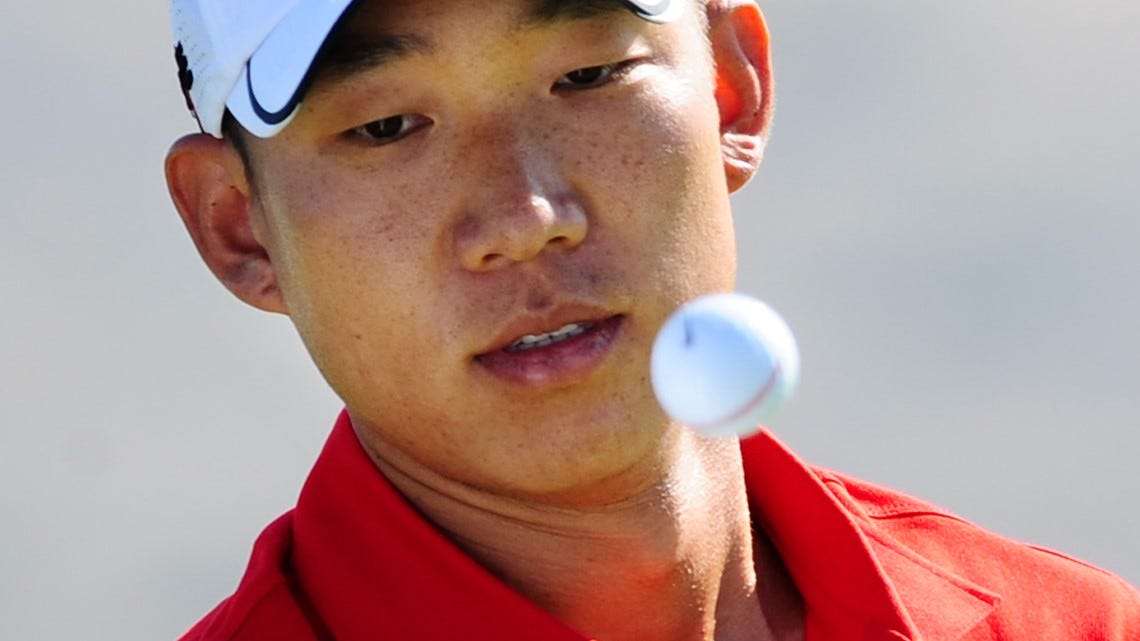
The public record of his family life is thin because Kim has kept much of it private. What we can say safely is what he himself has said and what is consistently reported by mainstream outlets: the pressure on him was intense from a young age, and the personal turmoil later in his life wasn’t confined to golf.
He attended La Quinta High School in California. Then he went to the University of Oklahoma for three years, and that’s where the prodigy turned into a professional in all but name.
Oklahoma: the numbers were already pro-level
Oklahoma doesn’t hand out hype for fun. It’s a programme that expects you to score, travel, win, and carry yourself like a paid athlete even when you’re not.
Kim left a measurable mark there. LIV’s own profile notes he set the school record for lowest career scoring average relative to par (71.73) during his time in Norman, Oklahoma.
As an amateur, he was also part of the winning USA team at the 2005 Walker Cup, a line on the CV that matters because it’s about selection. Someone picked him for pressure. Someone decided he belonged in the locker room.
He won the 2004 Northeast Amateur, the kind of title that sits quietly on Wikipedia pages until you realise how many future stars have won it.
This is what gets missed in most Kim retellings: he didn’t arrive on Tour as a fun character. He arrived as a polished competitor. He had already been trained to believe he was better than most of the field.
And then he got to the PGA Tour and behaved like it.
Turning pro: the rise that felt too quick to be stable
Kim turned professional in 2006, and the pace of his ascent was the sort that can distort a career. When everything comes fast, you don’t learn patience. You don’t learn boredom. You don’t learn what to do when it stops.
He won three times on the PGA Tour:
Wachovia Championship (May 2008)
AT&T National (July 2008)
Shell Houston Open (April 2010)
At his peak he reached world No. 6.
Kim’s major record never became what the early hype implied, but the flashes were real: third at the Masters in 2010 remains the best single-week evidence of what his ceiling could have been in Augusta air.
Then came the team events, the places where personality either collapses or becomes weaponised.
Team golf: where he turned swagger into points
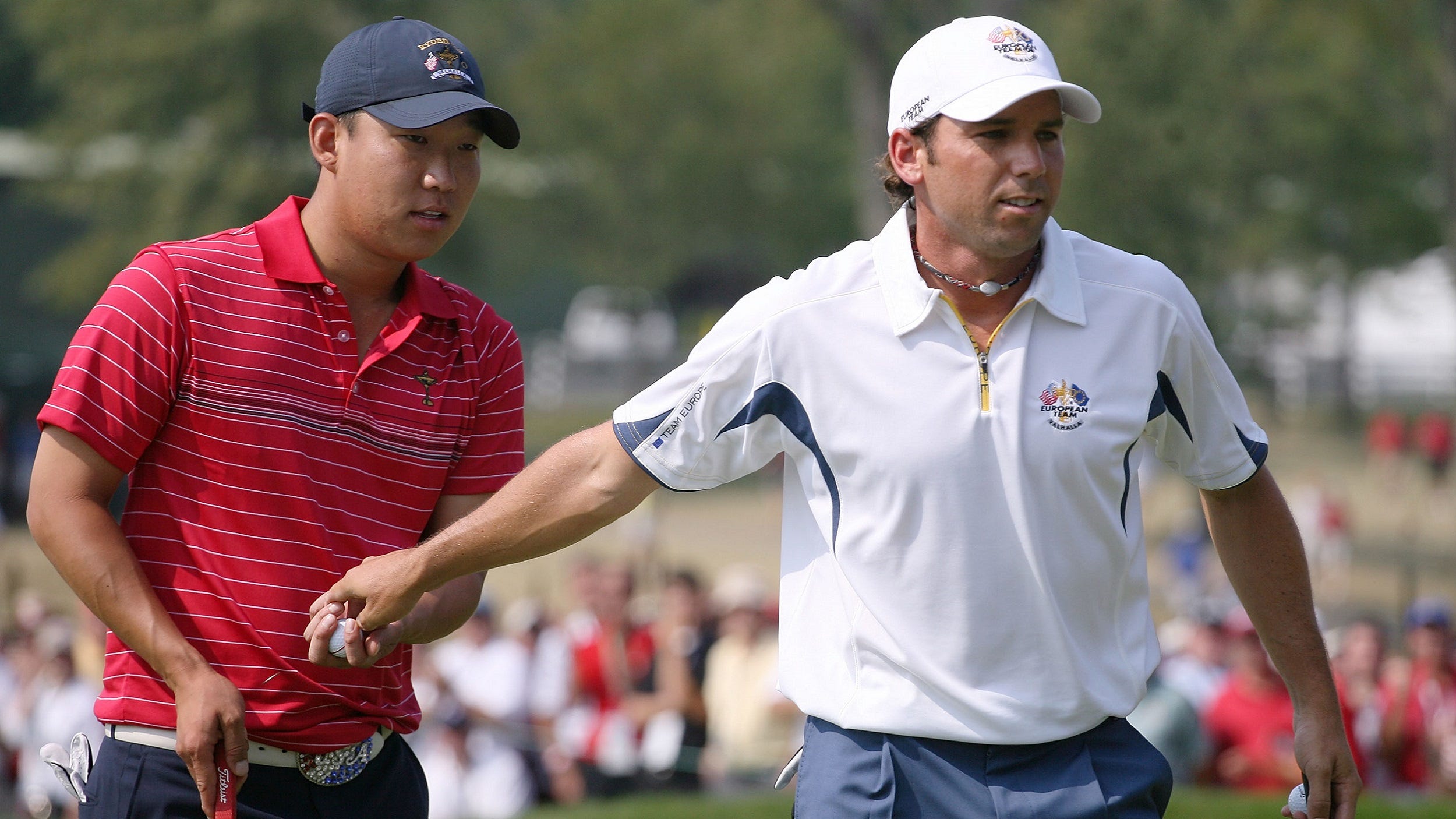
The defining image of Kim’s prime is still Ryder Cup Sunday in 2008: top of the order, Sergio García across the aisle, and Kim battering the match 5&4.
That win matters because it wasn’t a “nice contribution”. It was a tone-setter. It announced him as the kind of player who could turn nervous energy into aggression rather than caution.
A year later, he was part of the US side in the 2009 Presidents Cup, again operating in a team environment where your emotional bandwidth matters as much as your swing.
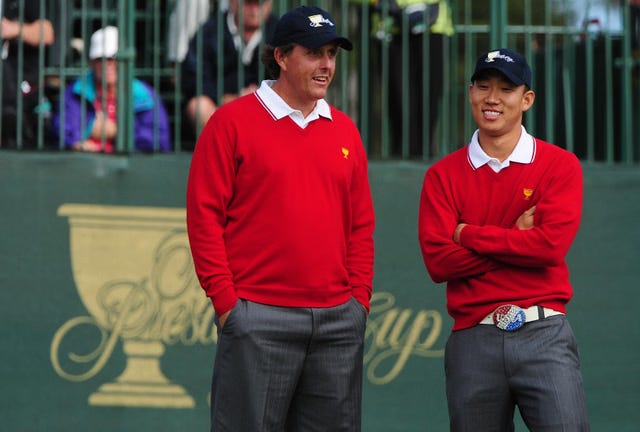
So the story, at that stage, looks straightforward: young star, wins early, thrives in pressure, climbs the ranking ladder.
Then the sport loses him.
The break: Wells Fargo, Achilles surgery, and the start of silence
Kim’s last PGA Tour appearance came in May 2012 at the Wells Fargo Championship at Quail Hollow. He withdrew after the first round. The next month he had surgery to repair his left Achilles tendon.
An Achilles injury can derail a career. It can change a swing. It can change a mind. But it rarely produces a decade of absence on its own.
With Kim, the injury was the match. Not the fire.
As the months turned into years, golf did what golf always does when facts are limited: it filled the gap with narrative. The same question kept coming back, dressed as gossip and presented as logic.
Why wouldn’t he come back?
The answer most people landed on was money.
The insurance shadow: the rumour that became the story
Disability insurance policies are common in elite golf. Careers are fragile. There’s no guaranteed contract. One swing can end it.
In Kim’s case, reporting in established golf media, dating back to 2014, suggested he held a policy that could pay out a sum widely described in the $10 million to nearly $20 million range, with conditions that could complicate a return to competitive golf.
We can say this without turning it into conspiracy: the insurance angle mattered because it offered a clean explanation for a messy disappearance. It made the absence sound rational.
But two things can be true at once:
A significant policy may have existed and paid out.
The policy does not explain the human collapse Kim later described.
Even if the insurance story is broadly true, it’s only one strand. The bigger strand is the one Kim has now spoken about publicly: addiction, mental health, and a body that kept breaking.
PULL QUOTE
“The insurance rumour explained the ghost. It didn’t explain the man.”
The part Kim now owns: addiction, mental health, and “dark moments”
For years, writers treated Anthony Kim like a missing person case. Since 2024, it’s been clearer, and harder, than that.
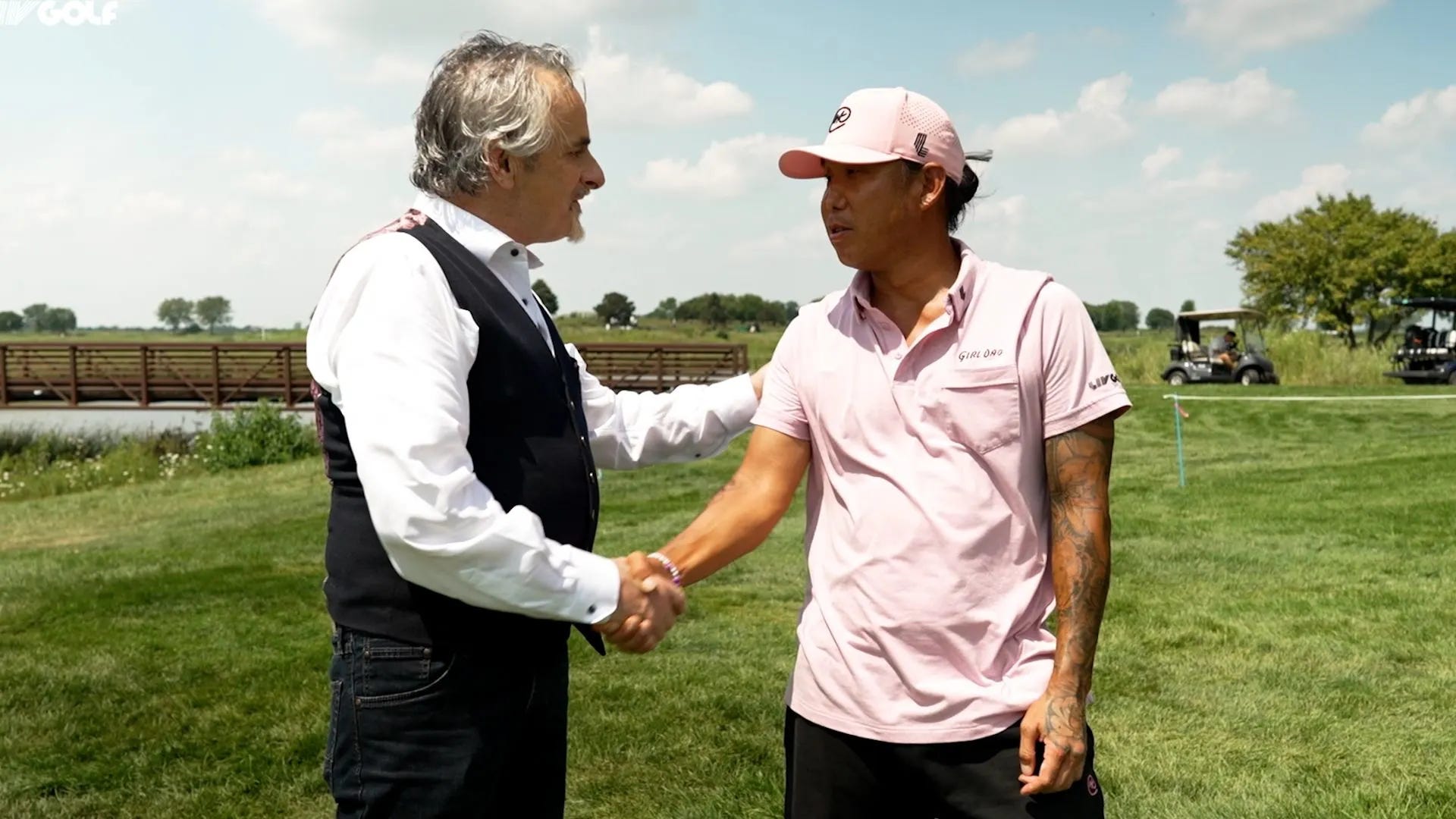
In a widely covered interview with David Feherty, Kim spoke about addiction, “dark moments”, and being targeted by scam artists while he was vulnerable.
ESPN’s reporting on the same period details Kim describing multiple injuries and surgeries, including a spinal fusion, alongside his addiction struggles.
In February 2025, Kim posted publicly about addiction, sobriety, and suicidal thoughts, including admissions suggesting he was using drugs even while competing in major championships.
That disclosure matters for two reasons:
It reclassifies the disappearance as a health crisis, not a quirk.
It forces everyone, fans, media, and rivals, to stop treating the story as a punchline.
This is not a redemption story you can wrap in a bow. It’s a survival story that happens to be playing out inside professional golf, right in front of our eyes in real-time.
And that’s why the league he came back to, and the way he came back, matters.
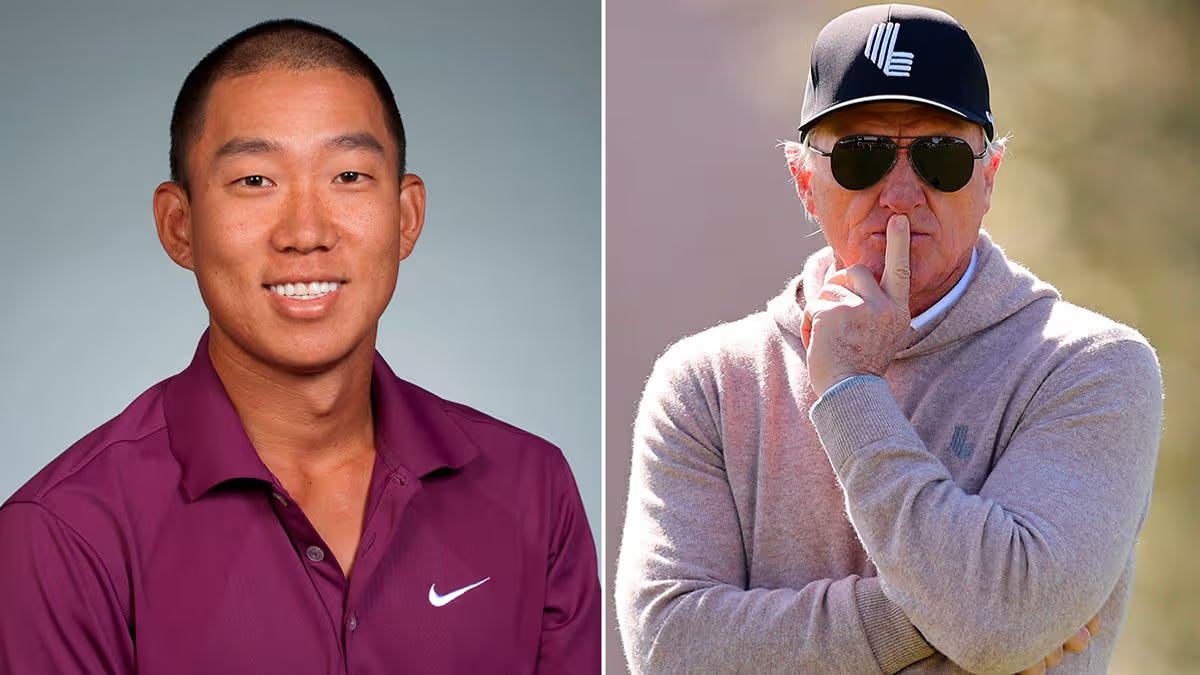
LIV’s wildcard gamble: story first, golf second (at the start)
Kim returned to professional golf in early 2024 as a LIV Golf wildcard.
The results at the beginning were blunt: he looked like a player who hadn’t played elite competitive golf in 12 years, because that’s what he was.
LIV gave him time. That is both a sporting decision and a business decision. A league that sells access to stars also sells storylines. Kim was the biggest storyline they could sign.
But by the end of 2025, the league’s structure forced a different kind of truth. Kim finished outside the cut line for retention and was relegated.
Relegation is the moment the comeback becomes real or goes away.
Because relegation doesn’t care about your history.
It cares about your number.
The rebuild: Asian Tour reps and the round that changed the tone
Kim’s route back wasn’t a studio montage. It was incremental golf in real fields.
In November 2025 at the PIF Saudi International, he shot a bogey-free 64 with seven birdies, his best round since returning, and put himself properly into contention.
That round is easy to romanticise. Don’t. Treat it as a signal:
He could still go low without chaos.
He could still hit enough fairways to give himself looks.
He could still finish a round clean.
Then he went to the one place LIV can’t fake for anyone: qualifying.
Promotions Event (January 2026): “Quit talking shit”
LIV Golf Promotions is the league’s version of Q-School. Few spots. Many players. No sentiment.
It ran 8–11 January 2026 at Black Diamond Ranch in Florida.
Kim finished third to earn one of the three wildcard spots for the 2026 season, sealing it with rounds of 66 and 69 in the 36-hole finale.
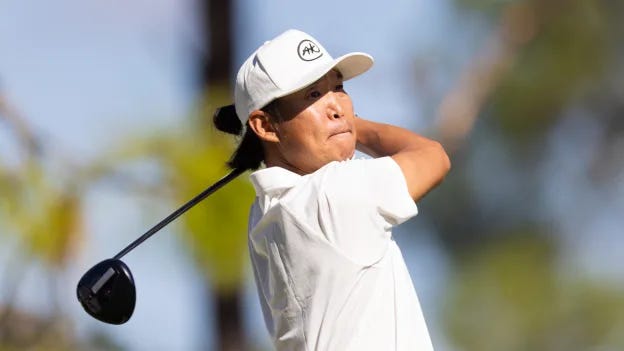
The tone matters here. Kim wasn’t shy about what it meant to qualify: he framed it as earning his place, not being given it.
This is the pivot point in the whole story. Without Promotions, the cynical read survives: “They brought him back for clicks.”
With Promotions, the cynical read weakens: “He lost his place and got it back the hard way.”
He didn’t just return. He requalified.
From independent wildcard to 4Aces: a proper seat at the table
Three days before Adelaide, LIV confirmed Kim would join Dustin Johnson’s 4Aces GC as a full team member for the remainder of the 2026 season, transitioning from independent wildcard status.
This is not a trivial detail. On LIV, team membership changes everything:
The week isn’t just about your own card.
You’re responsible for points.
You’re part of a group with expectations and internal accountability.
Kim’s first event as a 4Aces player became the week he won.
That is the kind of timing you don’t script. You either deliver it, or you don’t.
He delivered it.
Adelaide, 15 February 2026: nine birdies, no mistakes, and a win that didn’t blink
The decisive facts are stark:
Kim shot 63 on Sunday, bogey-free, with nine birdies.
He finished 23-under and won by three over Rahm.
He collected $4 million.
If you’re trying to understand what made this week different from the early part of his comeback, look at the shape of it: no messy scramble for par. No survival mode. No ugly stretch where he tries to “hang on”.
This was the old Kim, the one who was a young, cocky pro, who used to irritate fields and thrill TV producers: make birdies in batches, take the lead, and keep moving forward.
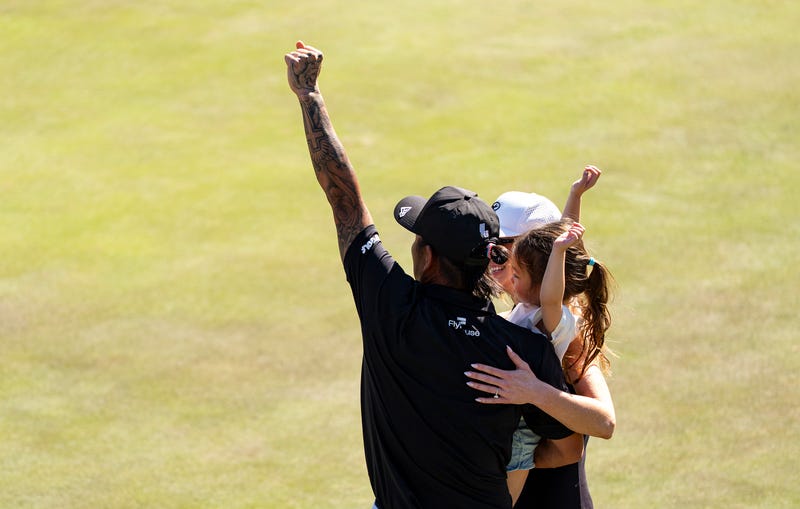
He, as is well reported, has been sober for three years and framed the win as a watershed moment, which tells you what mattered to Kim as much as what mattered to the leaderboard. which is why this story is so incredible and emotional.
In this, his greatest professional moment as a golfer, he overturned a five-shot deficit, with a spell of iron play and putting that the very best to ever play the game would be proud of. LIV’s broadcast coverage captured the emotional edge of the finish, and the look of someone who knows what it cost him to be there.
Golf loves a comeback. It rarely gets one this clean.
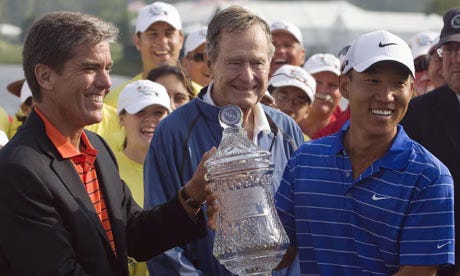
Key dates: Anthony Kim’s career in a straight line
TIMELINE
19 June 1985 — Born in Los Angeles.
2004 — Wins the Northeast Amateur.
2005 — Part of the winning USA Walker Cup team.
2008 — Wins twice on PGA Tour; reaches world No. 6; Ryder Cup win highlighted by a 5&4 singles victory over Sergio García.
2010 — Wins Shell Houston Open; finishes third at the Masters.
May/June 2012 — Withdraws Wells Fargo; left Achilles surgery; disappears from PGA Tour.
2024 — Returns to pro golf as LIV wildcard.
Nov 2025 — T5 at PIF Saudi International, including bogey-free 64.
11 Jan 2026 — Qualifies back into LIV via Promotions Event (third place).
12 Feb 2026 — Joins Dustin Johnson’s 4Aces as full team member.
15 Feb 2026 — Wins LIV Golf Adelaide with final-round 63.
Key numbers: what the comeback looks like in stats
3 PGA Tour wins.
No. 6 peak world ranking (2008).
12 years away from top-level competitive golf before the 2024 return.
63 on Sunday at Adelaide, bogey-free.
$4 million winner’s cheque at Adelaide.
Sidebar: where Kim fits in LIV’s 2026 ecosystem now
LIV’s structure is built around churn: spots are earned, lost, and re-earned. The league has needed that mechanism to defend itself against the charge that it’s exhibition golf with a dress code.
Kim has now lived the full system.
What changed in 2026
He earned his spot back through Promotions, one of three wildcard places available.
He moved from independent wildcard to a team role, joining the 4Aces.
He won immediately — the one outcome that collapses most arguments about “charity starts”.
What it means for LIV
It’s proof of concept for the league’s story that players can fall out of its ecosystem, rebuild, qualify back in, and then win. If you’re LIV, you couldn’t ask for a better case study, to the OWGR and the Majors.
What it means for the rest of the year
Kim is no longer a curiosity on the range. He’s someone you plan for on Sunday.
The uncomfortable part: this isn’t a neat redemption story
A win does not erase addiction. A trophy does not disinfect years. A final-round 63 does not undo the damage done to his body, his mind, or the people around him.
Kim has spoken openly about addiction, suicidal thoughts, and the years he lost. That candour has been documented in mainstream coverage and in his own public posts.
If anything, the honesty is what makes the Adelaide win feel heavier than the usual sports-movie version of a comeback. This isn’t a man pretending he took a sabbatical. It’s a man admitting he disappeared because he wasn’t well enough to live normally, let alone compete.
There’s also the practical reality: Kim has referenced multiple surgeries, including a spinal fusion, in recounting what kept him away. That’s not a footnote. That’s the foundation of why the comeback looked messy at the start.
So we treat Adelaide for what it is: one brilliant week, and a signal that the story is now about golf again, not just the mystery of the ghost.
What we’re watching next (and what could derail it)
A Sunday 63 can be a flare. The next month tells you if it’s a new baseline.
Here’s what supports the “this can last” argument:
The rebuild included real tournament reps, not just closed practice.
Promotions forced pressure. He handled it.
Team structure can help players who need routine and accountability, and LIV’s own announcement frames the move to the 4Aces as a shift into a steadier setup.
Here’s what still worries us:
The body. Multiple surgeries, including spinal fusion, are not a small detail; it’s a continuing risk.
The mental load. Now the comeback isn’t a novelty; it’s expectation. The pressure changes.
The week-to-week scoring floor. The great players don’t need miracles. They need repeatable iron numbers, a stable driver and a smooth putter..
If you want a simple marker to track, watch par-5 conversion and wedge proximity. Adelaide was birdie-heavy. Sustainability comes from turning good drives into close looks repeatedly, not from one hot putter week.
Why this win matters beyond LIV
LIV’s politics and golf’s power struggles will continue. This win doesn’t solve them. It does, however, sharpen three debates.
LIV’s pathway credibility
A relegated player went away, qualified back in, joined a team, and won. That’s harder to dismiss than a wildcard invite.
The majors conversation gets noisy again
Kim’s name matters because his young talent was never in question. Access to the league and his form in 2024 and 2025 were. Form is now part of the conversation again.
Golf’s culture has to grow up
For years, Kim’s disappearance was treated like a meme: insurance, nightlife, mystery. His own disclosures about addiction and suicidal ideation require a different tone from the sport and from those of us who cover it.

The ending he earned, and the one golf didn’t expect
Anthony Kim’s story was once told as a puzzle. Where did he go? What’s the real reason? Will he ever come back?
On Sunday at The Grange, the puzzle stopped being interesting. The scorecard took over.
Nine birdies. No bogeys. A three-shot margin over Jon Rahm. A $4 million cheque. A first win since 2010.
This isn’t closure. It’s not a tidy ending. It’s something better for sport and better for the person inside the story. It’s the point where the narrative stops being about disappearance and starts being about work.
For the first time in 16 years, Anthony Kim’s career isn’t being written by rumour.
It’s being written by results.