Koepka’s back. The PGA Tour has blinked and tightened its grip at the same time.
Brian Rolapp’s “Returning Member Program” gets Brooks Koepka reinstated with headline penalties.

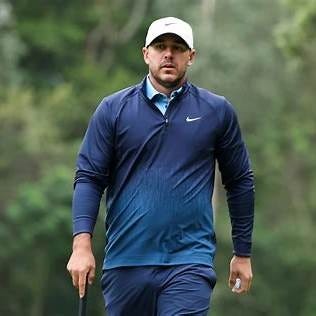
Brooks Koepka is returning to the PGA Tour, and the Tour has created a made-to-measure policy to make it happen. That’s not just admin. It’s strategy. The PGA Tour wants the best players together more often, and it’s now willing to price a comeback rather than block it.
Koepka posted about it on social media too, which tells you this is meant to be read as a reset, not a quiet exception, no mention of LIV but mention of family first.
Koepka wants a return to PGA Tour
What’s confirmed: the Koepka deal
Koepka notified the Tour on 23 December 2025 that his “previous affiliation had concluded” and applied for reinstatement. That triggered the creation of the Returning Member Program.
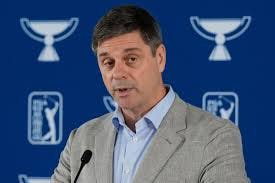
The programme’s core terms, as laid out in reporting on Rolapp’s member communication and Tour materials:
Five-year forfeiture of eligibility for the Tour’s Player Equity Program. The Tour frames the implied opportunity cost at $50m–$85m, depending on performance and Tour growth.
No FedExCup bonus payments for the 2026 season.
A $5m charitable contribution tied to the arrangement.
Fields expanded as needed, to avoid “taking opportunities” from current members.
A hard application window that closes 2 February 2026, described as one-time and “not a precedent”.
Koepka is expected back quickly, with reports pointing to starts as soon as the Farmers Insurance Open and WM Phoenix Open.
The weird part: “one-time only” that everyone will treat as a precedent
If the PGA Tour wanted a deterrent, it already had one: suspension and uncertainty. Instead it has built a structured lane back, then insisted it’s not a template.
That’s the tell. Once you publish a pathway, agents and players will price it into every future decision, even if the Tour swears it won’t reopen the window.
Contrarian point: the Tour hasn’t slammed the LIV door. It’s installed a toll booth.
The equity “penalty” is doing PR work and it may age badly
The Tour is selling the punishment in one number: $50m–$85m of foregone equity.
But that’s not money being repaid. It’s hypothetical upside from an equity scheme whose value depends on future Tour economics and governance. Equity can rise. It can also disappoint. The further out you go, the more that number becomes narrative rather than certainty.
And the Tour has just expanded the equity concept. Reports describe an enlarged Player Equity Program that now includes recurring grants linked to FedExCup performance, pushing equity deeper into the pay structure and making it an even bigger headline lever.
So yes, Koepka’s penalty is real, but it’s also a marketing number built on projections.
Who else is eligible and why they probably won’t move
The other obvious eligible players under the “elite recent wins (2022–2025)” concept are widely reported as:
Jon Rahm
Cameron Smith
Bryson DeChambeau
A rush before 2 February feels unlikely. LIV contracts aren’t casual, and the political cost of flipping twice in two years is real.
But there’s a deeper reason Bryson, in particular, is complicated and it has nothing to do with swing changes.
Image rights: the lever the Tour still pulls hardest
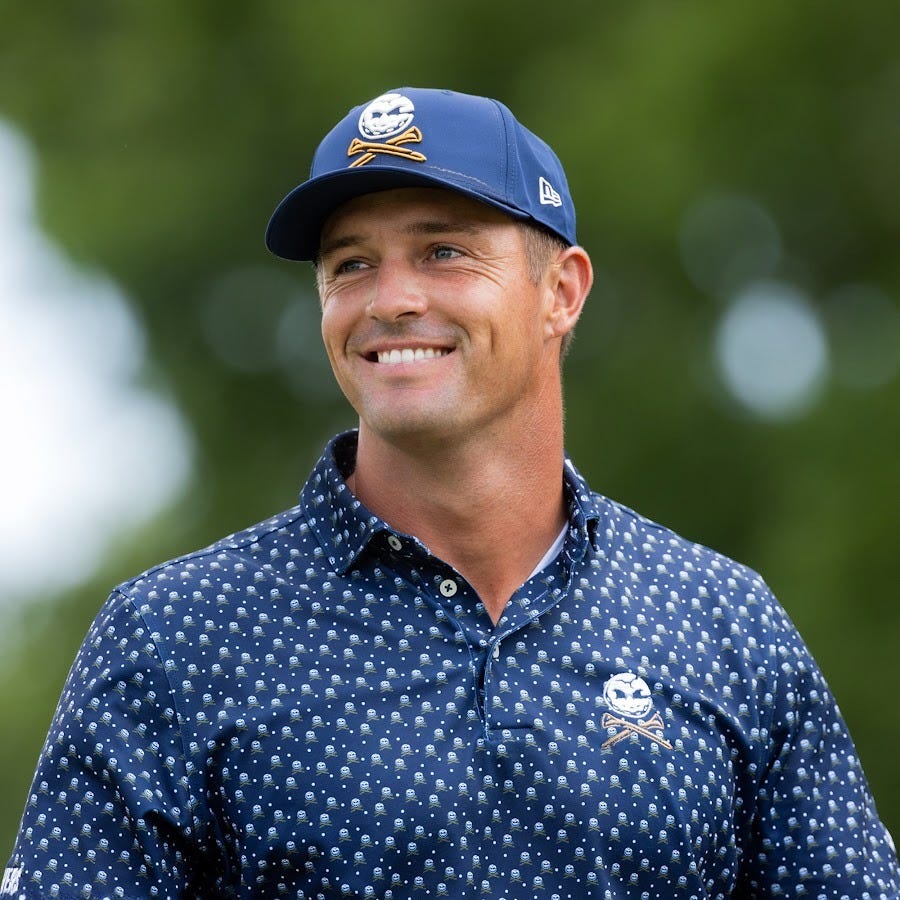
If you want the cleanest explanation for why this “path back” isn’t equally attractive to every star, look at media rights.
The PGA Tour handbook states that members grant and assign to the Tour the TV, digital and “all other media rights” for PGA Tour events, and describes those rights as Tour property.
That collides directly with DeChambeau’s business model. He’s not just a golfer; he’s a high-output content creator, with a huge YouTube presence built on access and on-camera storytelling.
Even with the Tour slightly loosening social media enforcement in 2025 (as reported), the core point stands: under the Tour’s framework, a player’s ability to capture, package and monetise tournament-related content is still constrained by centralised rights and credential rules.
So Bryson’s decision isn’t simply “LIV money versus Tour legacy”. It’s also: can I keep running my media company the way I do now?
Contrarian point: the Tour says it wants to “enhance the fan experience”, but the most modern fan-growth machine in elite golf is player-led content and Tour control over rights is the thing most likely to choke it.
Does this actually hurt LIV?
Short term: YES. Koepka leaving is a hit to LIV’s star power and optics.
Long term: it’s murkier. This programme doesn’t read like a weapon aimed at LIV. It reads like the PGA Tour accepting a new market reality and trying to regain control of the migration narrative.
The real risk for the Tour is that it reduces the fear factor for the next wave of jumpers. It tells players: there might be a way back, with defined costs, especially if you’re important enough.
That’s not crushing LIV. That’s making LIV easier to justify for certain profiles.
LIV’s “future value”: still a promise, not a price
LIV’s pitch has increasingly leaned on team concepts and long-term franchise value. But the public numbers we have paint a league still in heavy build mode:
Reuters reported PIF’s total LIV investment (not spend) approaching $5bn, with revenue less than $150m in 2024.
Increase in Sponsorship revenue has started to hit in 2025, but their is a long way to go, in the commercialisation phase of “Project Wedge”.
So yes, there may be future upside. But right now LIV’s “value” is mostly strategic certainty (backing, contracts, schedule) rather than a clean equity story.
That context matters because the PGA Tour is selling Koepka’s penalty as forfeited equity upside. In a world where both sides are pushing long-dated value narratives, players are being asked to choose between two sets of projections.
The takeaway
Koepka’s return is a win for the PGA Tour’s product. Fans will get a better field more often. That’s real.
But the policy is bigger than Koepka:
It normalises the idea that leaving is not necessarily forever, if the Tour chooses to price your return.
It turns equity into a headline punishment, even though the number is inherently uncertain.
And it highlights the Tour’s biggest remaining piece of control: image and media rights, which could be the decisive factor for creators like Bryson.
If the Tour wants this “path back” to be more than a one-off PR moment, it will eventually have to confront that last point. A modern star doesn’t just want tee times. He wants distribution.
What I’m watching next
Whether any of Rahm/Smith/DeChambeau even explore the window before 2 February, or leave Koepka as the lone exception.
Any quiet shift in PGA Tour rules or practice that creates a clearer player-content carve-out (licensed highlights, creator lanes, monetisation rules).
LIV’s next meaningful commercial signal, media, sponsorship, team monetisation, because that’s what turns “future value” from rhetoric into something agents can actually price.