Koepka’s reinstatement bid is the PGA Tour’s first real “post-LIV” test
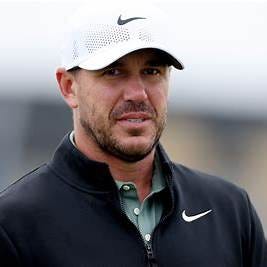
Brooks Koepka didn’t just quit LIV. He’s now asking to come home. How the PGA Tour handles it will tell every big name in golf what the rules really are in 2026.

Confirmed: what we actually know (and what we don’t)
Confirmed
Koepka and LIV Golf parted ways “amicably” after the 2025 season (23 December 2025), despite him having 1 year left on his deal.
Koepka has applied for PGA Tour reinstatement (his membership lapsed after he left for LIV).
The PGA Tour’s current rules requires a player to be one year removed from their last LIV start to be eligible to play Tour events; Koepka’s last LIV appearance was 24 August 2025, which would point to late August 2026 as the earliest clean date under a strict reading.
The decision sits with new CEO Brian Rolapp, with input from the Tour’s competition structure brain-trust (including Tiger Woods’ Future Competition Committee).
Reported
Jon Rahm has said on the Subpar Podcast, he “had an idea” the split might be coming, but through Koepka, not LIV. He also floated that a suspension might still be part of the process.
Unknown
The length and mechanics of any discipline are not public, yet.
Whether there’s has been a negotiated settlement (between tours, teams, lawyers) is not verified.
Reported: the Tour’s policy problem (and why Koepka is the worst possible “first case”)
The PGA Tour built its LIV response on a simple deterrent: leave and you lose access. That’s the point of a ban.
But Koepka is uniquely awkward:
He’s not a fringe returnee chasing a Monday qualifier. He’s a five-time major winner.
He isn’t bringing peak leverage on form. His results have cooled since his 2023 peak.
And his timeline is clean enough to test the rulebook: if the policy is “one year removed”, everyone can count to August 2026.
Family issues and the difficulty and emotional heartache of his wife’s miscarriage reportedly in the summer of 2025.
So the Tour’s choice becomes binary in public perception even if the actual process is messier:
Option A: Enforce the rule hard
Message: “You can come back, but not on your timetable.”
Benefit: Keeps faith with members who stayed. Reduces “defect-and-return” arbitrage.
Cost: Looks petty to fans. And it may push more stars to treat the majors as the only “must-play” calendar.
Option B: Wave him straight in (or shorten the sit-out)
Message: “The war is cooling. Talent wins.”
Benefit: A star back on Tour is still a star. It also signals to other LIV names that the exit door isn’t locked.
Cost: It detonates morale. PGA Tour pros have already hinted there’s tension around a Koepka welcome-back.
My read: the Tour can’t afford Option B without offering something to the locker room. If Koepka gets a soft landing, expect a compensating move: tighter future language, a public “process”, or a behind-the-scenes concession to members (sponsor exemptions, more starts, another pathway).
The loyalty tax: what about players who didn’t take the payday?
This is the part fans ignore and Tour members obsess over.
Players who stayed took:
smaller guarantees
more starts to keep status
reputational “good soldier” capital that only matters if the organisation rewards it
If Koepka gets back with minimal penalty, the Tour effectively announces:
“The loyalty tax was voluntary.”
That has two downstream effects:
Future defections become cheaper. Even if LIV shrinks, the concept of leaving is less scary.
The Tour becomes more transactional. Players stop defending “the product” and start negotiating their own optionality.
That’s why voices like Brandel Chamblee are so adamant: if you remove the consequences, you remove the deterrent, one of a very few things I personally agree with Brandel.
The Pat Perez question (and the Champions Tour spill-over)
Confirmed:
The Tour has recently reiterated that participation in unauthorised LIV-related events can trigger discipline, including one-year bans, we’ve seen this play out with the LIV Promotions event and the frankly crazy situation of banning Non-Members of the PGA Tour for a year.
Messy reality:
The announcement and reporting that broadcast or promotional association can also be treated as “involvement”, (which Perez has been penalised for) but the underlying Tour documentation and any specific case facts aren’t public in a way you can bank on, although reports did allude to where this is in the Policy Handbook.
My read: Koepka’s reinstatement is going to force the Tour to clarify whether “involvement” means playing only or any commercial association. If the Tour goes soft on a star player but stays hard on a mid-tier name (or a broadcaster), it looks arbitrary. Arbitrary policy doesn’t deter anyone. It just breeds litigation.
What this does to LIV (good and bad)
Koepka leaving hurts LIV precisely because it’s not a relegated journeyman. It’s a prestige signing walking away early.
Positives for LIV
It can sell “movement” as proof players aren’t trapped. That matters as LIV tries to look like a real labour market.
LIV is also actively reshaping its product and branding: 2026 is moving to four-day, 72-hole format, increased pathways, bigger turnover of players and a schedule set on a more global basis.
Negatives for LIV
It reinforces the fear that LIV is a holding pen: big cheques, limited ranking movement (pending the outcome of OWGR decision, majors as the only true stage.
It adds pressure on LIV’s face players—the ones who make the league feel major-adjacent.
Bryson, Rahm, Hatton, Smith: who’s next, and why Koepka matters to them
Koepka’s move is less about his own schedule and more about what it signals:
Bryson DeChambeau
Publicly through reporting and interviews notably with Tom Hobbs of FlushingIT, leaning on team stability and performance narratives, and he is clearly not only one of LIV’s core assets, but golfs biggest assets.
If Koepka is allowed back smoothly, Bryson gains leverage in every direction: “I can stay, but I don’t have to.”
Jon Rahm
Rahm sounded like a player watching the precedent being set in real time. He doesn’t seem to know the mechanics, but he’s clearly thinking about the pathway.
Rahm’s bigger issue is structural: ranking, majors, and European eligibility, plus he also has a lot more to lose financially given he still has a number of years left on his LIV contract.
Hatton / Cam Smith (and the rest)
Their calculus stays the same until two things change:
OWGR starts awarding meaningful points to LIV, or
The PGA Tour makes return frictionless (or predictable)
Right now, OWGR is still reviewing LIV’s (renewed) application and has explicitly linked its thinking to meritocracy and event structure; there was an OWGR board update on 30 December 2025 and no final decision, although reports suggest it is pretty imminent and OWGR chairmen Trevor Immelman alluding to that, the board can get together quickly in January/February.
Koepka’s case won’t decide OWGR. But it will influence whether players feel they need OWGR at all.
Rumour: “the lawyers have talked”
Rumour
That’s plausible in the abstract because the tours (and their backers) live in the same legal universe. But there is no confirmed reporting that Koepka’s reinstatement is part of a negotiated tour-to-tour package.
What we can responsibly say
The broader chessboard is still live. Golf Digest noted the PGA Tour has rebuffed recent PIF overtures around “unification” in the same period Koepka exited.
That doesn’t prove coordination. It just tells you this is happening amid continuing, unresolved power politics.
Free agency in golf: Koepka as the first real lever
If you want “true free agency”, you need two ingredients:
Portable eligibility (you can play where you want)
Portable ranking access (your career doesn’t die on paperwork)
Koepka’s situation spotlights both:
If the PGA Tour enforces a strict sit-out, more players will treat themselves as independent contractors: majors + a secondary circuit (DP World Tour invites, limited starts, appearance-driven calendars).
Koepka even has a plausible European route: DP World Tour late applications can be considered in “exceptional circumstances”, DPWT have confirmed this.
DP World Tour fines: does this speed up their end?
Probably not.
The DP World Tour has already had legal backing for its right to fine/suspend (and the ecosystem is moving the other way: LIV reportedly stopped paying those fines for players).
Reuters also reported Henrik Stenson paying over £1m in fines as part of his DPWT return orbit.
So Koepka doesn’t kill DPWT fines. But he does increase the odds that elite players try to build careers that are less dependent on any one tour’s permission.
OWGR: the real bottleneck
OWGR is plainly no longer wrestling with format given its December statement but still highlighting access concerns, expecting 10% to 15% of player turnover. Comments, made by Peter Dawson back in 2023.
OWGR has updated how it treats scheduled 54-hole and curtailed events while continuing its LIV review. The format debate is narrowing, the bigger question now is access and turnover, alluding to a 10% to 15% of player turnover. Comments, made by Peter Dawson back in 2023.
LIV are addressing this with increased relegation spots to be confirmed, but expected to be between 9 and 11 players.
If LIV gets points, the “free agency” era arrives overnight.
If LIV doesn’t, the PGA Tour’s discipline policy becomes the de facto gatekeeper for a lot of careers.
Contrarian angle: the PGA Tour might need to go easier than it wants
Here’s the uncomfortable thought for Tour loyalists:
If the PGA Tour wants to reassemble a truly dominant product (for sponsors, media, and, quietly, future negotiations), it needs a credible return pathway for stars. Not a free pass. A pathway.
A hard-line ban feels righteous. It also keeps the split alive.
Koepka is the test balloon. Not because he’s the best player right now. Because he’s the first who matters enough to force a real decision.
What I’m watching next
The PGA Tour’s language, not just the outcome: do they cite a clear policy basis, or hide behind process?
Whether Koepka plays a “bridge” schedule (majors + selective invites) while waiting out the calendar.
OWGR’s next move on LIV’s application, because that will reshape every player’s leverage more than any suspension length.