




Nursery to Masterpiece (1931 – 1950)
Bobby Jones wanted a sanctuary. Clifford Roberts wanted a stage. What emerged from their partnership was neither purely private nor entirely public, but something more calculated: a tournament designed to feel inevitable, a golf course engineered to appear ancient, and a week in April that would eventually own the calendar more completely than any other sporting event in America.
The Masters, from its inception, was not discovered, it was constructed. Every element, from the routing of holes to the colour of the champion’s jacket, from the timing of the azalea bloom to the language used in press releases, was deliberate. This is the story of how two men built a monument disguised as a retreat, and how the first two decades established the operating system that still governs Augusta National today.
The Fundamental Premise: Control as Tradition
Before we can understand the Masters, we must accept its founding logic: Augusta National Golf Club was created first, and the tournament was designed to serve the club’s identity. This inverts the typical relationship between venue and event. Most tournaments exist independently of their host courses, moving from site to site or sharing a course with public play. The Masters exists to glorify Augusta National, to justify its exclusivity, and to broadcast its carefully curated image to the world.
This is why the tournament has always been called “The Masters Tournament” and not “The Augusta Open” or “The Georgia Championship.” The name centres the concept of mastery, of the game, of the course, of oneself, rather than the location. It suggests that the tournament is not bound by geography but by excellence, even though it has never been played anywhere else.
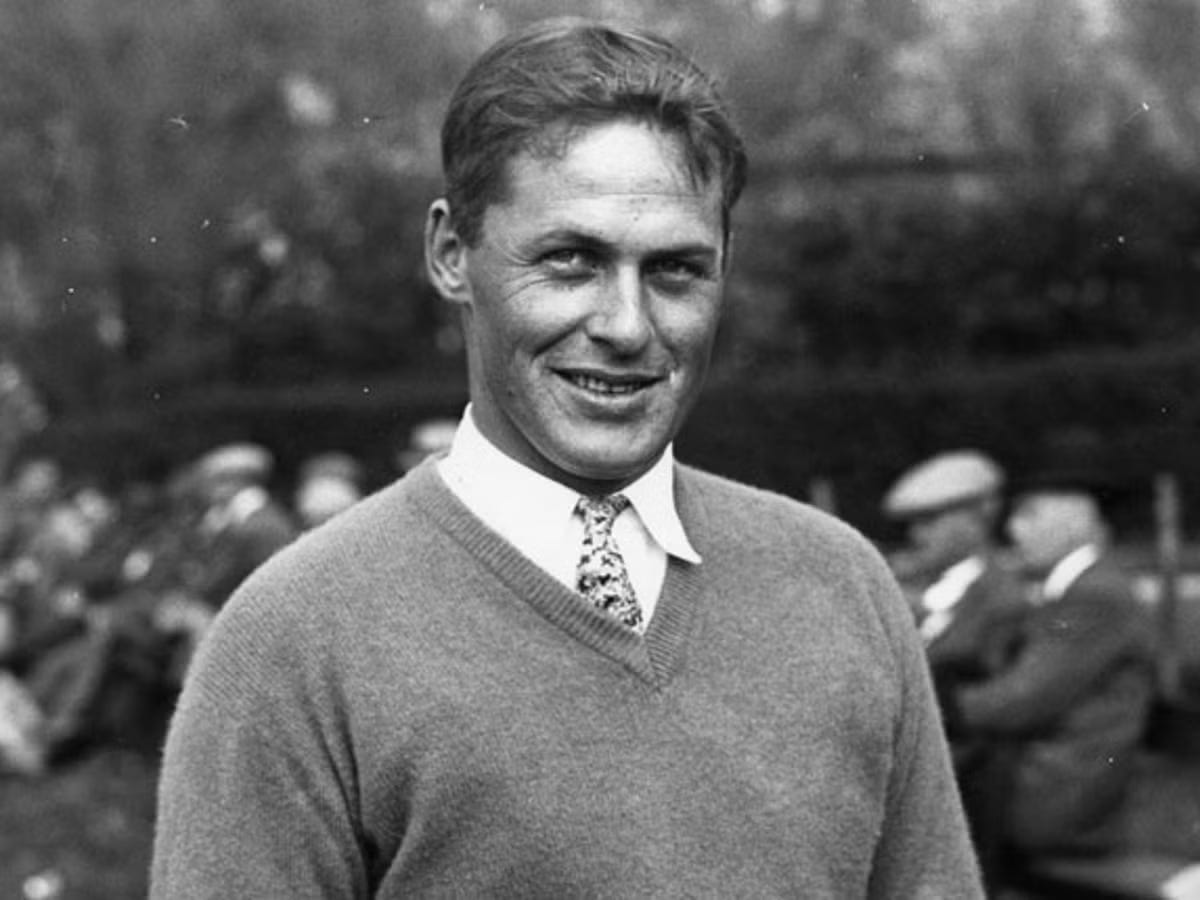
The naming itself was contentious. Clifford Roberts, the Wall Street investment banker who served as the club’s chairman for four decades, wanted to call it “The Masters Tournament” from the beginning. Bobby Jones, ever the gentleman amateur, found the name presumptuous and self-congratulatory. For five years, from 1934 to 1938, they compromised on “The Augusta National Invitational Tournament,” a title that emphasised the club’s control, this was an invitation, not an open championship, while avoiding Roberts’ grandiosity. In 1939, Jones finally relented. Roberts got his name, and the tournament got its mythology.
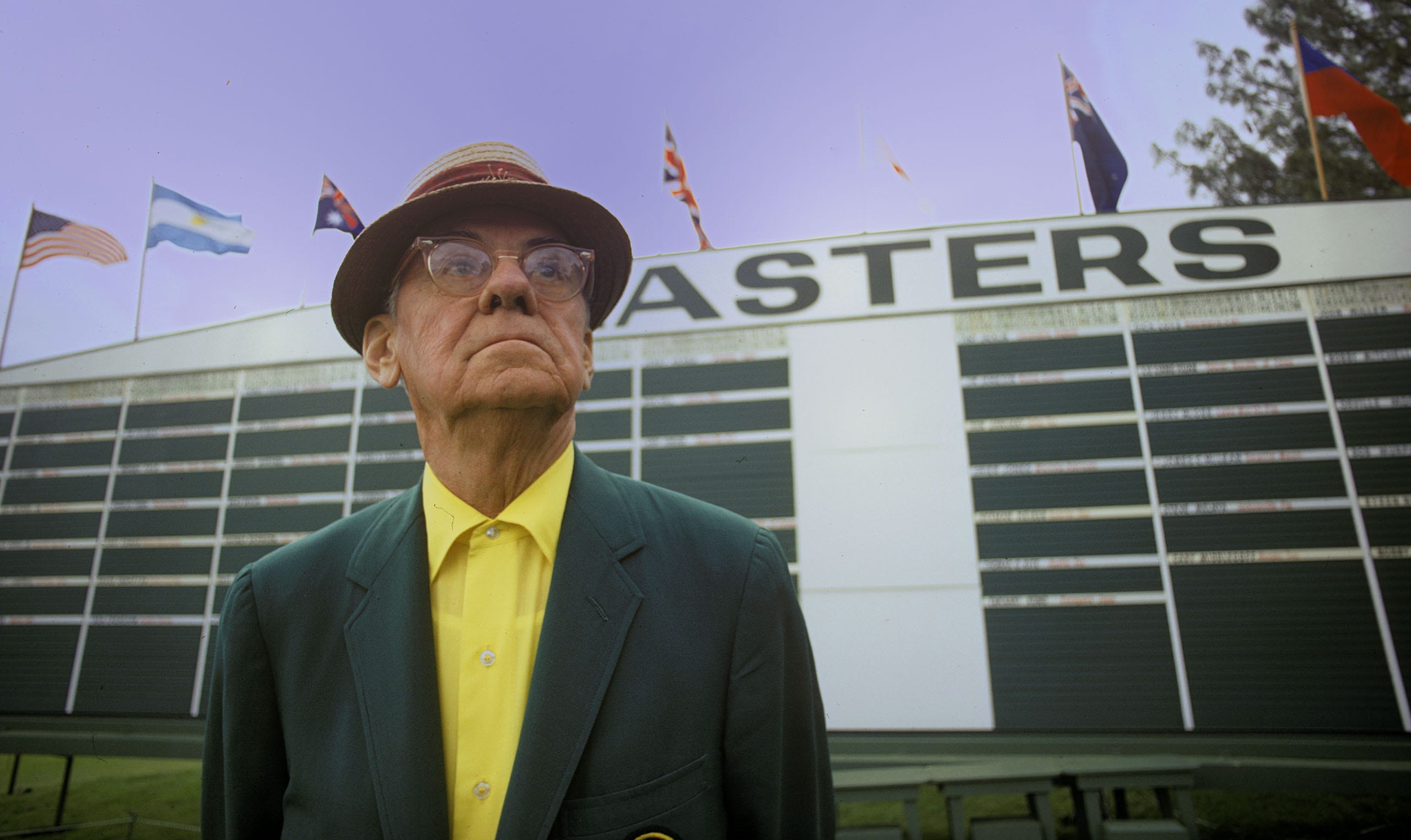
This small battle reveals the dynamic that would define Augusta National for generations: Jones provided taste, credibility, and restraint; Roberts provided ambition, organisation, and an almost pathological need for control. Together, they created something that felt both refined and ruthless.
The Land: A Nursery, Not a Links
The property that became Augusta National was not virgin wilderness or windswept linksland. It was Fruitland Nursery, a 365-acre horticultural paradise established in 1857 by Belgian immigrants Louis Mathieu Edouard Berckmans and his son Prosper Jules Alphonse Berckmans. For nearly 80 years before Bobby Jones ever saw the land, the Berckmans family had cultivated it into one of the most important plant nurseries in the American South.
Prosper Berckmans, in particular, was a horticultural genius. Over five decades of research, he planted more than three million peach trees in the Augusta region and introduced countless ornamental plants, shrubs, and flowering trees to the Southeast. The azaleas that now define the Masters’ visual identity, those explosions of pink, white, and purple that frame every broadcast, were developed and propagated by the Berckmans family. The towering pines, the magnolias, the dogwoods: all were part of the nursery’s inventory.
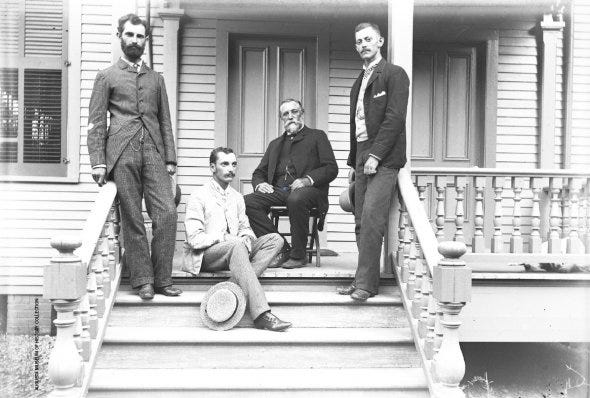
When Jones and Roberts acquired the property in 1931, they were not buying raw land. They were buying a designed landscape, a botanical collection that had been curated for three-quarters of a century. This is crucial to understanding Augusta National’s aesthetic. The course does not look “natural” because it mimics nature; it looks natural because it was built on land that had already been shaped by human hands for beauty and commerce.
The Fruitland Manor house, the Berckmans family home, still stands on the property today. It serves as the clubhouse annex and houses the Champions Locker Room. Past winners enter that building each April to find their Green Jackets hanging in their lockers, a ritual that connects them to the land’s history even if most don’t know the Berckmans name.
The Architect and the Advocate: MacKenzie and Hollins
Bobby Jones wanted Alister MacKenzie to design his course, but he didn’t discover MacKenzie on his own. The connection came through Marion Hollins, one of the most important and least-celebrated figures in early Augusta National history.
Hollins was a champion amateur golfer, a pioneering female course developer, and a woman who moved through the male-dominated golf world of the 1920s and ‘30s with remarkable authority. She had worked with MacKenzie on two California masterpieces: Pasatiempo Golf Club, which she founded and developed, and Cypress Point Club, where she played a decisive role in the routing. When Bobby Jones visited Pasatiempo and saw MacKenzie’s work firsthand, he was convinced. Hollins’ endorsement carried weight, and her experience in large-scale golf development provided a template for what Jones and Roberts were attempting.
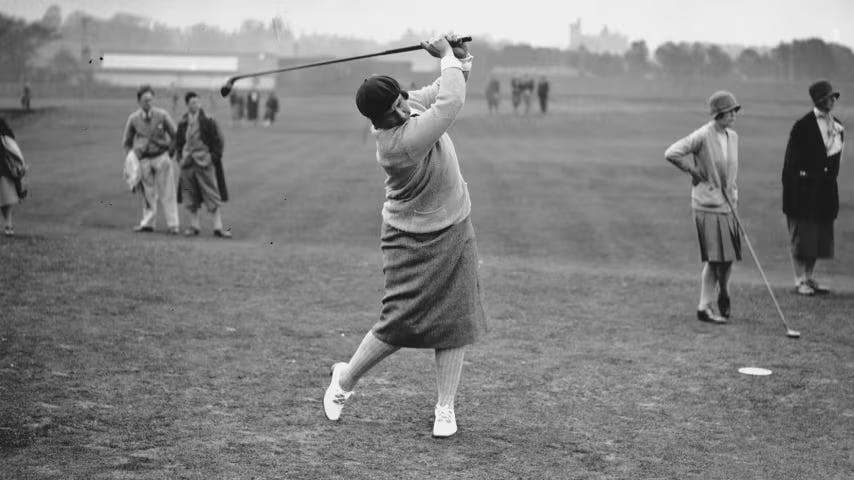
Some historians argue that Hollins’ influence extended beyond the introduction. She visited Augusta during the design phase, offered input on strategy and aesthetics, and helped shape the philosophy that would define the course: strategic variety, visual deception, and an emphasis on the approach shot rather than raw distance. MacKenzie’s design principles, hazards that appear more dangerous than they are, greens that reward precision and punish poor angles, risk-reward options on nearly every hole, were perfectly suited to Jones’ game and temperament.
MacKenzie himself described Augusta National as a course where “the player who thinks will have an advantage over the player who does not.”
MacKenzie himself described Augusta National as a course where “the player who thinks will have an advantage over the player who does not.” This was not a course designed to punish with narrow fairways and penal rough. It was designed to seduce with width and beauty, then extract a price for careless strategy. The course looked easy. It played hard. That gap between appearance and reality became Augusta National’s signature.
MacKenzie died on January 16, 1934, just months before the first Masters, and never saw his design achieve immortality. But his philosophy, that golf courses should be beautiful, strategic, and psychologically challenging, became the foundation of Augusta National’s identity.
1934: The First Tournament and the Fluid Course
Horton Smith won the first Masters Tournament on March 22, 1934, finishing at 284 and claiming a one-stroke victory over Craig Wood. Smith, a smooth-swinging professional from Missouri, was already a star, having won the first tournament ever sanctioned by the PGA Tour in 1928. His victory gave the new tournament immediate credibility.
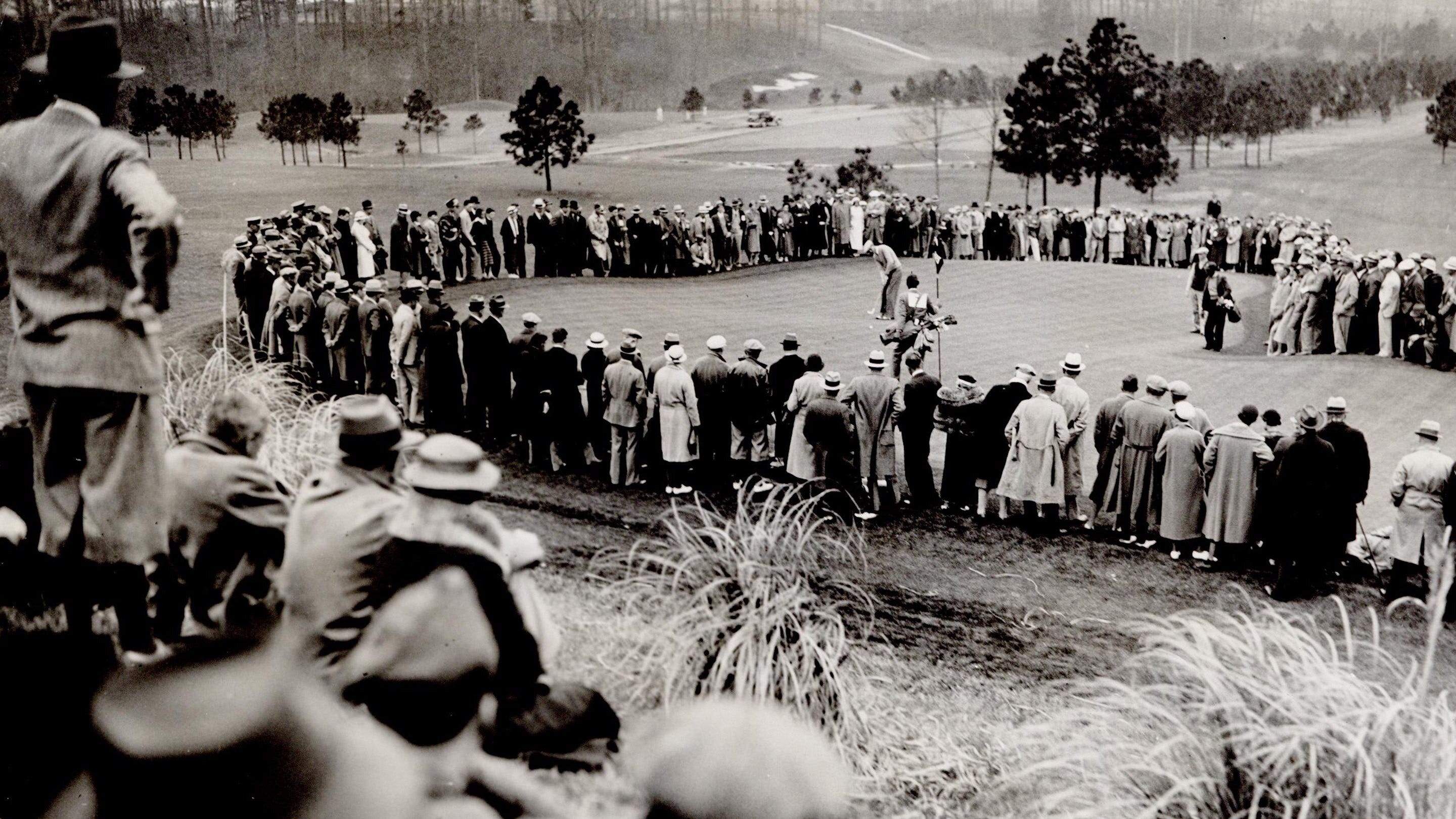
But the more important story from 1934 is structural: the course itself was still being invented. The nines were reversed for the first tournament, meaning players started on what is now the back nine. In 1935, they were reversed again, settling into the routing we know today. This fluidity is significant because it contradicts one of Augusta National’s most cherished myths: that the course is sacred and unchanging.
In truth, Augusta National has been altered constantly, greens rebuilt, bunkers added and removed, trees planted and cut down, tees pushed back hundreds of yards. The club has always maintained that these changes preserve the “spirit” of MacKenzie’s design, but the reality is more pragmatic: Augusta National changes the course to protect par and maintain relevance as equipment and athletes evolve. The myth of permanence is useful for branding, but the reality is adaptation.
The first tournament also established another precedent: Bobby Jones would play. He had retired from competitive golf after his 1930 Grand Slam, but Roberts convinced him that his participation was essential to the tournament’s success. Jones played in the Masters every year from 1934 to 1948, never winning but always drawing crowds. His presence was the tournament’s greatest marketing asset, proof that this was not just another professional event but something special, something worthy of the greatest amateur champion in history.
1935: Sarazen and the Birth of Masters Mythology
If 1934 established the Masters as viable, 1935 made it mythological.
Gene Sarazen arrived at the 15th hole in the final round trailing Craig Wood by three strokes. Wood had already finished his round and was in the clubhouse, likely measuring himself for a winner’s trophy that didn’t yet exist. Sarazen needed an eagle to have any chance, a birdie to stay mathematically alive. A par would end his tournament.
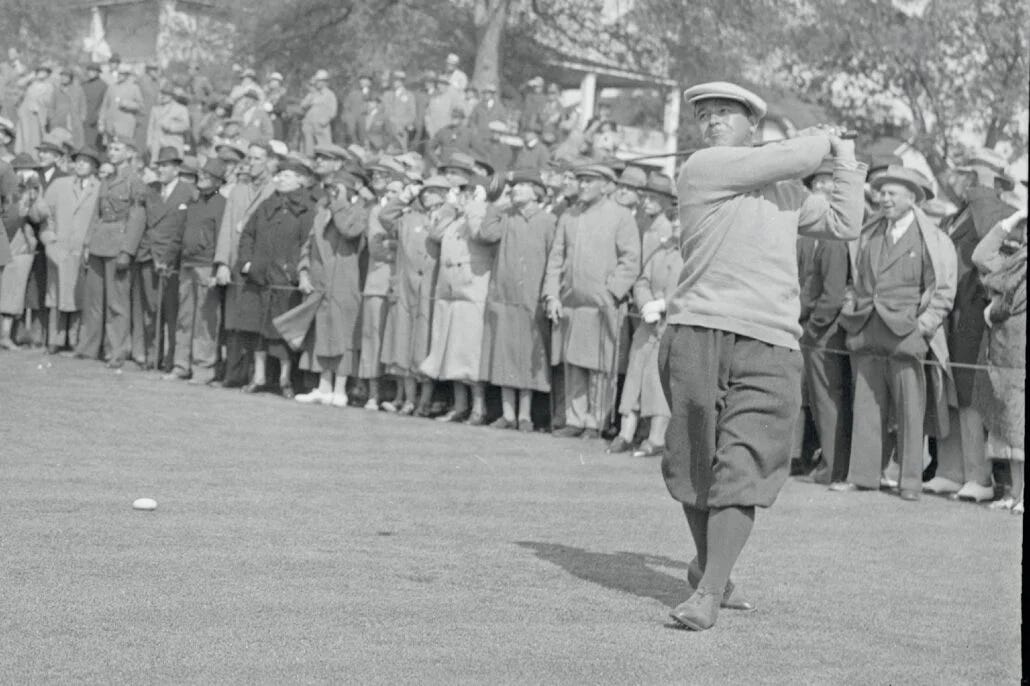
He pulled a 4-wood from his bag. The hole played 485 yards that day, and Sarazen had 235 yards remaining to a green fronted by water. It was a shot that required perfect contact and perfect trajectory, too low and it would find the pond; too high and it would fly the green into the gallery.
Sarazen struck it pure. The ball flew on a rope, landed just short of the green, bounced twice, and disappeared into the hole. An albatross. A 2 on a par-5. Only a handful of spectators witnessed it in person, but the shot’s impact was immediate and permanent.
Sarazen’s albatross forced a 36-hole playoff with Wood, which Sarazen won by five strokes. But the playoff is almost forgotten now. What endures is the shot itself, replayed in grainy footage, described in reverent tones, and enshrined as “the shot heard ‘round the world.”
Augusta National learned something crucial in 1935: moments matter more than champions. A tournament could be elevated to major status not through history or tradition, it had neither, but through singular, unrepeatable events that could be retold across generations. The albatross gave the Masters its first legend, and the club has been manufacturing and preserving legends ever since.
The April Lock: Owning the Calendar
Beginning in 1940, the Masters was permanently scheduled for the first full week of April. This decision, like so many at Augusta National, appears simple but carries profound implications.
April in Augusta is when the azaleas bloom, when the dogwoods flower, when the weather is most likely to be temperate and beautiful. The timing creates a visual spectacle that reinforces the tournament’s aesthetic brand. But more importantly, the April lock creates predictability, which over time becomes tradition, which eventually becomes ownership.
The Masters does not share April with other major sporting events. It does not compete with the World Series or the Super Bowl or the NBA Finals. It stands alone, a rite of spring, an annual reset for the golf season. The calendar does much of the branding work. When you think of April, if you follow golf, you think of Augusta.
This is control disguised as inevitability. The Masters feels like it has always been in April, like it could not possibly be anywhere else, but that feeling is the result of decades of repetition, not natural law.
The War Years: When the Monument Became a Farm
In the fall of 1942, Augusta National Golf Club closed. The Masters was suspended. The United States was fully engaged in World War II, and golf tournaments seemed frivolous, even obscene, in the context of global conflict.
Bobby Jones suggested raising cattle and turkeys on the property to maintain the grass and generate income. Clifford Roberts agreed. For roughly three and a half years, livestock grazed the fairways where legends would later walk. Cattle wandered the 10th hole. Turkeys roosted near the clubhouse. The grounds crew harvested pecans from the trees Prosper Berckmans had planted decades earlier.
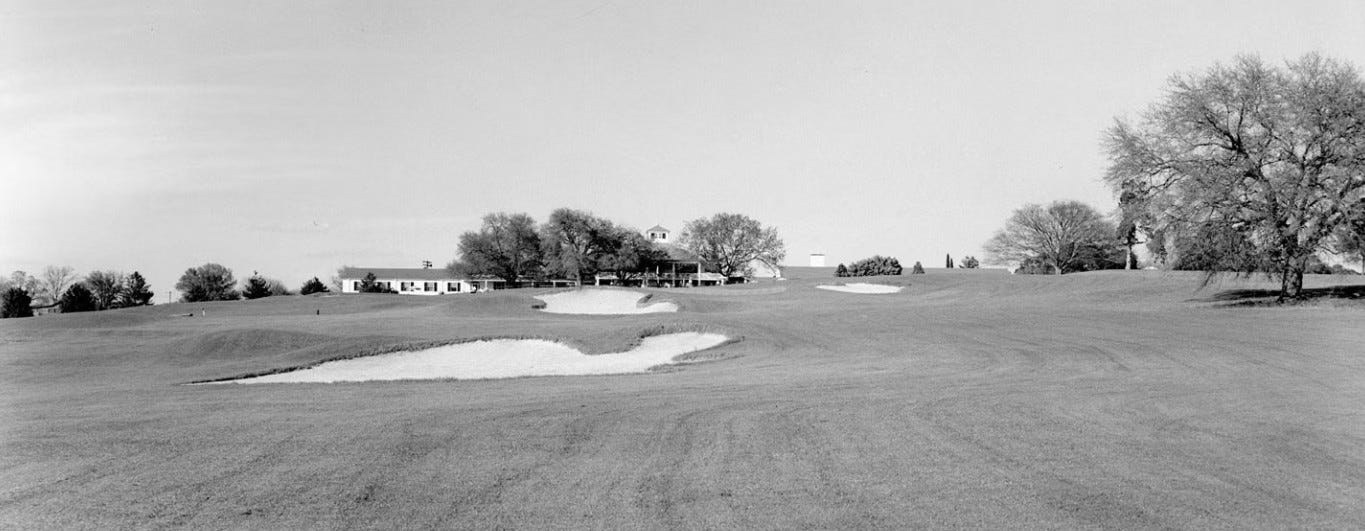
This period is one of the most revealing in Augusta National’s history, not because of what happened, but because the club acknowledges it at all. The war years shatter the illusion of timelessness, the myth that Augusta National emerged fully formed and has existed in a state of perfection ever since. The club was young, vulnerable, and dependent on forces beyond its control.
When the Masters resumed in April 1946, it had to re-establish itself. The tournament had been closed for roughly three and a half years, an eternity in sports. But Augusta National treated the hiatus as an anomaly, not a disruption. The 1946 tournament was presented as a continuation, not a restart. Herman Keiser won, and the Masters moved forward as if it had never stopped.
This ability to control narrative, to decide what is remembered and how it is framed, became one of Augusta National’s defining characteristics. The club does not ignore its history, but it curates it carefully, emphasising continuity and tradition while quietly managing the messier realities.
The Green Jacket: From Uniform to Trophy
In 1937, Augusta National members began wearing green jackets on the club grounds. The purpose was functional: patrons could easily identify members and ask for assistance. The jackets were not prestigious; they were practical.
In 1949, everything changed. Sam Snead won the Masters, and Augusta National presented him with a green jacket, transforming a member’s uniform into the champion’s prize. The decision was brilliant and strange in equal measure. The jacket was not a traditional trophy, no engraving, no pedestal, no permanence. It was a garment, and more specifically, a borrowed emblem of membership.
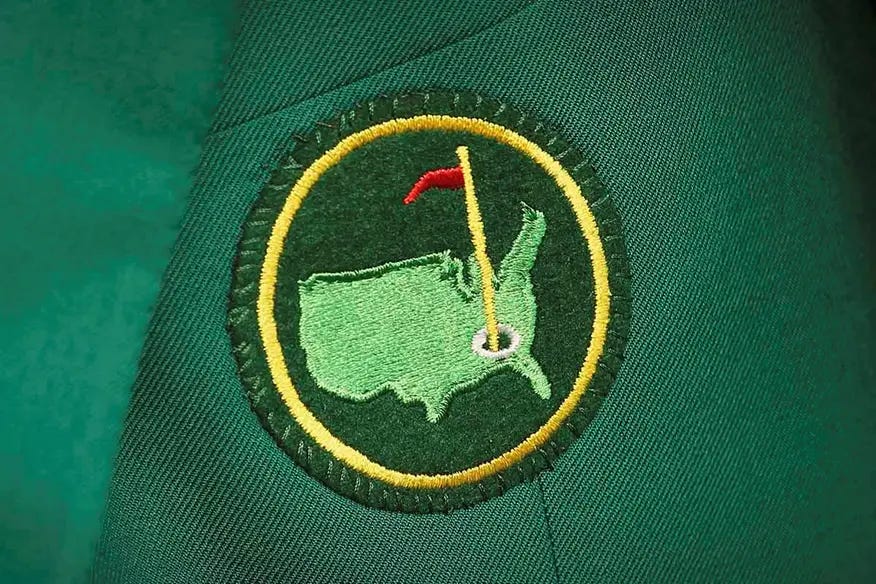
The champion receives the jacket in a ceremony, wears it for a year, then returns it to Augusta National, where it hangs in the Champions Locker Room. The message is subtle but unmistakable: you can win here, but the club determines what winning means. You are granted temporary membership in an exclusive fraternity, but the terms are set by Augusta National, not by you.
The Green Jacket became the most recognizable prize in golf, more iconic than the Claret Jug or the U.S. Open trophy. It is not the most valuable or the most beautiful, but it is the most exclusive. You cannot buy it. You cannot fake it. You can only earn it by winning the Masters, and even then, it never fully belongs to you.
The Early Champions: Building the Pantheon
Gene Sarazen’s 1935 victory, secured by his legendary albatross at the 15th hole, gave the tournament its first mythological moment, the shot that transformed the Masters from a promising new event into something destined for greatness.
Henry Picard won in 1938, defeating Ralph Guldahl and Harry Cooper. Picard was known as the “Hershey Hurricane” and later became a revered teacher, mentoring both Ben Hogan and Sam Snead.
Ralph Guldahl won in 1939, claiming his only Masters title in a career that included back-to-back U.S. Opens (1937-38).
Jimmy Demaret won three times (1940, 1947, 1950), more than anyone in this era. Demaret was a showman, known for his colourful clothing and easy charm, and his success at Augusta helped establish the tournament’s appeal beyond the sport’s traditional audience.
Craig Wood finally claimed his Masters title in 1941, after twice finishing as runner-up (1934 to Horton Smith, 1935 to Gene Sarazen in that famous playoff). His victory was a testament to persistence and the cruel beauty of Augusta National’s near-misses, something that would haunt many a player in the decades not yet written in The Masters history.
Herman Keiser won in 1946, the first champion after the war years, shooting 282 to hold off Ben Hogan by one stroke. His victory marked the tournament’s successful return from its wartime closure.
Claude Harmon won in 1948, shooting a course-record 279 that would stand for years. Harmon later became the head professional at Winged Foot and Seminole, teaching generations of elite amateurs and professionals and creating the Harmon dynasty of elite golf teachers.
These champions were not accidents. They were strategic thinkers, precise ball-strikers, and men who understood that Augusta National rewarded patience and punished aggression. The course was selecting for a certain type of golfer, and in doing so, it was defining what “mastery” meant.
Sam Snead won in 1949, becoming the first recipient of the Green Jacket as champion’s prize (described earlier). His victory inaugurated the tradition that would become the tournament’s most recognisable symbol.
1950: The System is Complete
By the end of its first two decades, the Masters had accomplished something unprecedented in American sports: it had created a self-sustaining system of ritual, mythology, and control.
The tournament was locked to April, creating seasonal inevitability. The Green Jacket had transformed from uniform to trophy, establishing a visual symbol that transcended golf. The course had been refined and mythologised, its beauty and strategy celebrated in newspapers and magazines. The champions were being woven into a larger narrative, their victories presented not as isolated achievements but as chapters in an ongoing story.
Bobby Jones, though no longer competing, remained the tournament’s spiritual centre, the gentleman amateur whose vision had created this sanctuary. Clifford Roberts, increasingly powerful and increasingly autocratic, managed every detail with an iron hand, ensuring that the Masters experience was controlled from the moment patrons entered the grounds until they left.
The war years had tested the tournament’s resilience and proven that it could survive disruption. The naming battle had been resolved in Roberts’ favour, cementing “The Masters” as the tournament’s permanent identity. The course had been altered and refined, establishing the precedent that Augusta National would change as needed to protect its vision.
Most importantly, the Masters had learned to manufacture moments, Sarazen’s albatross, Snead’s first Green Jacket, Nelson’s playoff victories, and preserve them as mythology. The tournament understood that it was not selling golf; it was selling a curated experience, a week in April when the world’s best players competed on the world’s most beautiful course for the world’s most exclusive prize.
This was not a tournament that happened to be well-run. This was a tournament designed, from its inception, to feel timeless, inevitable, and sacred. By 1950, the operating system was complete. Everything that followed, Palmer and Nicklaus, Tiger and Phil, the international expansion and the modern era, would be built on the foundation laid in these first two decades.
The Masters was no longer Bobby Jones’ sanctuary or Clifford Roberts’ monument. It had become something larger: a self-perpetuating institution that controlled its own narrative, managed its own mythology, and owned a week in April more completely than any other sporting event in the world.
The next 75 years would only deepen that control.