
The PGA Tour Equity Program is a loyalty contract dressed up as ownership
The PGA Tour didn’t build an equity plan because it wanted to behave like a tech start-up. It built it because LIV proved stars can leave, and the Tour had no “asset” to hold them.

The PGA Tour didn’t build an equity plan because it wanted to behave like a tech start-up. It built it because LIV proved stars can leave, and the Tour had no “asset” to hold them.
So the Tour created one: PGA TOUR Enterprises. Then it started paying players in slices of the upside. With timers. With forfeitures. And with a very deliberate liquidity problem.
This is the deep mechanics: how it works, where it sits, how it’s valued, how players vest, what happens at year eight, and who ultimately writes the cheques.
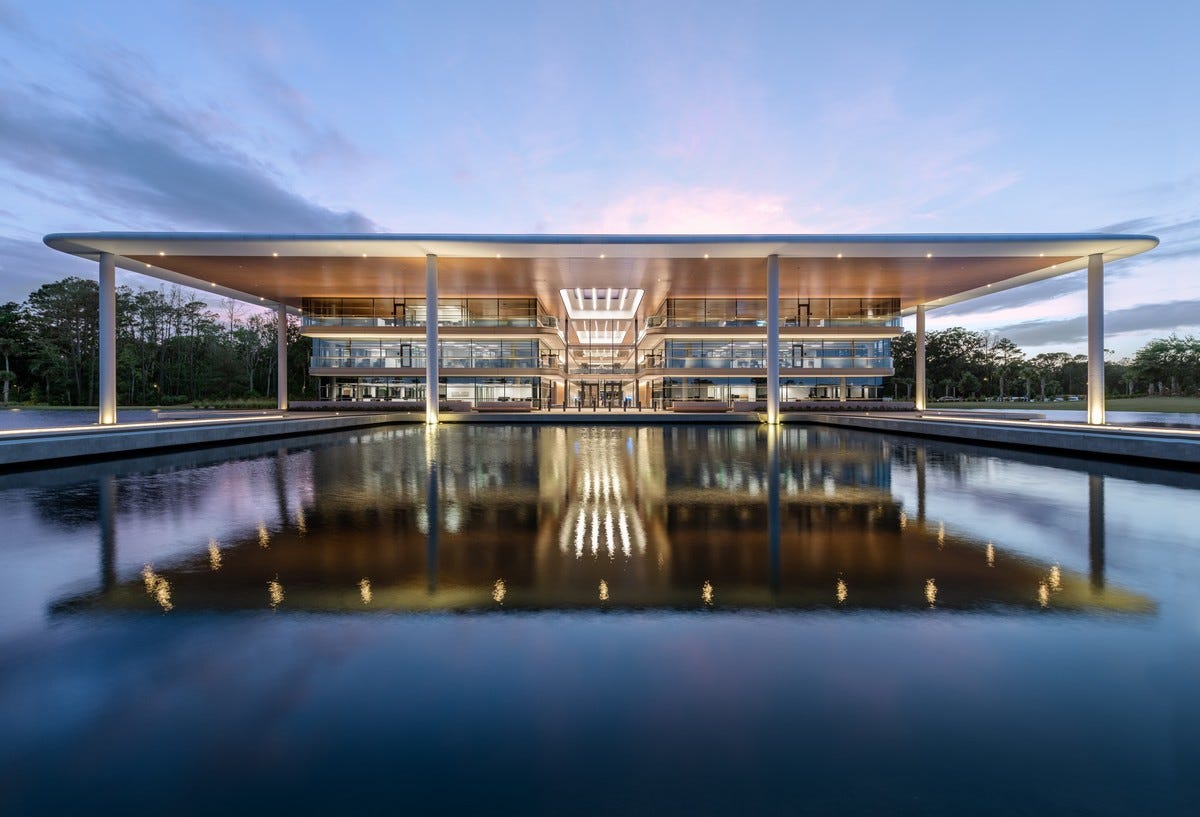
1) What it is, explained simply
The Player Equity Program grants selected players equity in PGA TOUR Enterprises, the Tour’s for-profit commercial company.
It is not weekly prize money. It is not a pension. It is a long-term retention instrument.
The incentives are clear:
Stay and your equity vests over time.
Leave and you risk forfeiting unvested equity (because eligibility is tied to membership/participation).
Return later and you may find the door open, but priced to hurt (the Koepka-style precedent makes the point).
The equity is designed to do two things at once:
make the Tour’s best players feel like owners;
make defection financially irrational once you are “on the clock”.
2) Where it sits: PGA TOUR vs PGA TOUR Enterprises
Golf’s key structural shift is that the Tour has split its identity:
The PGA TOUR (the circuit)
The Tour is still the organising body that sanctions and runs the competitive ecosystem, with the traditional charitable framework around events.
PGA TOUR Enterprises (the asset)
Enterprises is the commercial engine, the entity designed to hold the value that investors can buy into and that players can be granted pieces of.
This matters because the Tour’s bargaining power changed overnight. Before Enterprises, the Tour was effectively saying: “We’re a schedule.”
Now it says: “We’re a business with a cap table.”
Governance is the signal
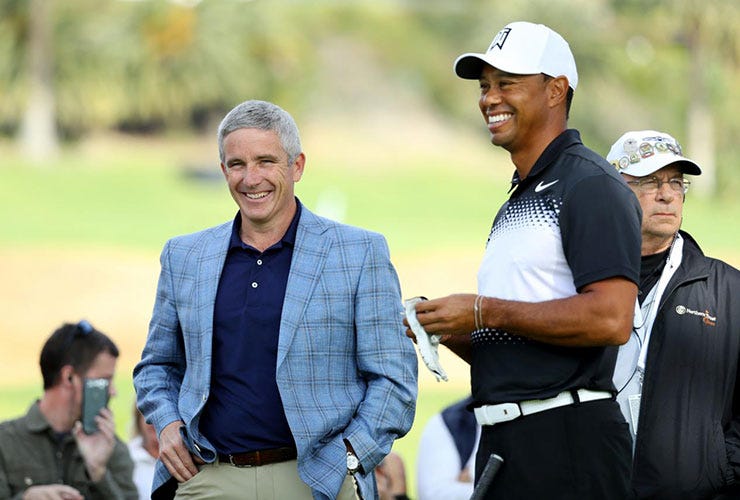
Enterprises was built with player leadership embedded in governance. Tiger Woods’ role in the structure is the headline, but the deeper point is this: the Tour wants players to believe they have institutional power, not just influence.
It’s part optics. It’s also part defence. A rival league is less persuasive if you’re a shareholder in the incumbent.
3) How the Tour values it and why that valuation is political
The Tour doesn’t need a stock ticker to create a valuation. It can imply one via private capital.
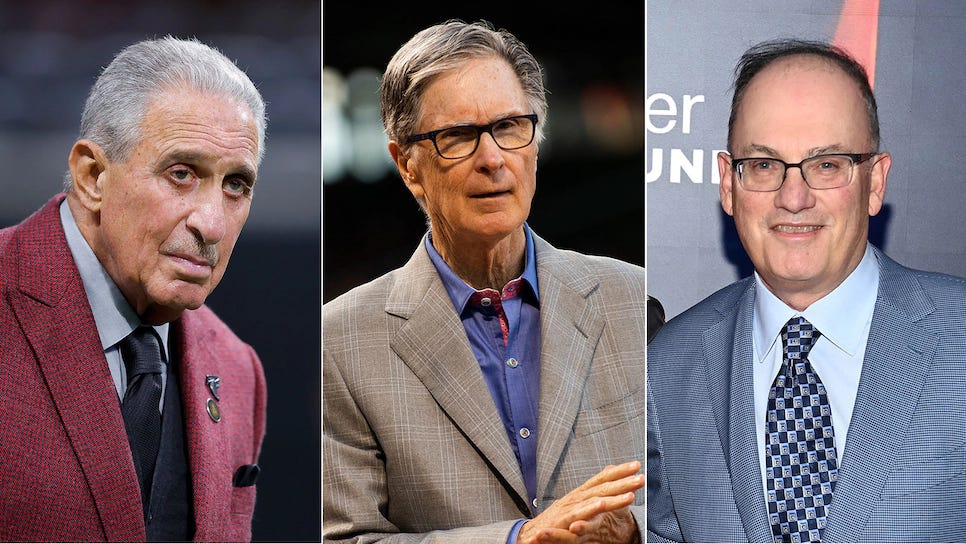
The investment by Strategic Sports Group (SSG) is the anchor. The public line has been $1.5bn in initial capital with potential to go to $3bn total.
That does two jobs:
It establishes a benchmark valuation in the market’s mind (whatever the implied number is, it becomes a reference point).
It lets the Tour say to players and partners: we can recapitalise without PIF Investment, at least for now.
This is why valuation is political. It’s leverage:
leverage against LIV in the talent war,
leverage against the PIF in negotiations,
leverage over players who might be tempted by a cheque today.
4) Vesting: how players actually “earn” the shares
The core structure (as reported) is straightforward:
Players receive equity grants across categories (top stars, steady performers, emerging talent, and past legends).
Equity vests over eight years:
50% after 4 years
75% after 6
100% after 8
The meaningful payday comes only when equity is fully vested and a sale mechanism exists.
This is the leash. Eight years is not an accident. It’s a golfer’s prime.
Also: equity creates tax and cashflow considerations at vesting points. In other words, players can end up with “value” on paper without immediate cash in hand. That’s normal in private equity structures and exactly why liquidity mechanics matter.
5) What happens after the “eight years”?
Important clarification: eight years is the vesting horizon for each grant, not automatically the lifespan of the entire programme.
So the real question isn’t “does it end at eight years?”
It’s “what happens when the first big cohort becomes fully vested and wants liquidity?”
If the programme began granting large equity tranches in 2024, the first wave of full vesting lands around 2032. That’s the first true stress test.
Three outcomes are plausible:
A) The programme continues and refreshes
The Tour keeps issuing recurring grants to new cohorts (it is already moving in that direction), and equity becomes a permanent feature of the Tour’s comp system, but with dilution and complexity baked in.
B) The programme shifts towards buybacks and cash
If too many players want to sell at once, the Tour may prefer cash bonuses or buyback windows rather than expanding outside ownership.
C) It is reset into a new scheme
If the commercial outlook changes, especially media rights, the Tour may rewrite the programme with new grant sizes, new terms, and tighter transfer controls.
The common thread: the Tour will want to control who owns Enterprises. That means liquidity is likely to be managed, not free-market.
6) Liquidity and buyers: who writes the cheque?
This is the section that decides whether the Equity Program is a genuine wealth engine or just a retention tool with good marketing.
The uncomfortable reality
Equity becomes money only through:
company buybacks,
approved secondary sales, or
a major liquidity event (sale/IPO/merger).
An open market is the least likely outcome. The Tour won’t want random third parties, or conflicted parties, quietly accumulating meaningful stakes via player sales.
The most likely buyer of player equity: the company itself
The cleanest model is periodic buybacks by PGA TOUR Enterprises.
That would turn player equity into a form of deferred compensation:
you vest,
you wait for a buyback window,
you sell back under controlled terms.
This keeps the cap table tidy and prevents the ownership base from turning into a geopolitical chessboard.
But it also means: the equity programme is only as strong as the company’s ability to fund buybacks.
Which brings us to SSG and media rights.
7) How SSG gets paid back: three routes
SSG’s job is to invest capital and get a return. That return can come three ways:
Route A: Distributions (the slow money)
If Enterprises generates strong profits, investors can be paid through regular distributions (or periodic specials). This is the “healthy sports property” model.
Risk: profits are heavily exposed to the media cycle.
Route B: A liquidity event (the big swing)
SSG can exit some or all of its stake through:
a future funding round at a higher valuation,
a strategic investor buying in,
or, longer term, an IPO (less likely near-term, but always the theoretical endgame).
This is where the PIF question keeps resurfacing: not necessarily “buy the whole Tour”, but “buy in at the moment liquidity is needed”.
Route C: Buyout by the Tour/Enterprises (the closed loop)
If the Tour wants SSG out later, Enterprises can buy back SSG’s stake, funded by cashflows, new capital, or refinancing.
We can’t see the term sheet, so we can’t assert exact preferences or redemption rights. But in private deals, structured exits are common.
8) The second $1.5bn: why it matters more than people think
The “up to another $1.5bn” is not just extra money lying around. It’s likely:
staged,
tied to initiatives,
tied to performance,
and a lever to ensure the Tour executes on commercial growth.
If the Tour’s revenue outlook worsens, that additional capital becomes a stabiliser, but also a form of investor influence.
9) The media rights cliff: what happens if the next deal is weaker?
This is the real timer under the eight-year vesting schedule.
The PGA Tour’s current US media agreements run through 2030. That means the renewal cycle (and market testing of golf’s true value) becomes a late-decade event, with negotiations likely heating up well before expiry.
If the next cycle values PGA Tour rights materially lower, the knock-on effects are brutal:
A) Valuation compresses
Private valuations are ultimately expectations of future cashflows. If rights revenues fall, equity feels less like ownership and more like a promise.
B) Buybacks get harder
If players vest in the early 2030s and want cash, buybacks require spare cash or new capital. A weaker media deal reduces spare cash.
C) SSG’s return pathways narrow
If cash generation is weaker, SSG leans harder on:
forcing new revenue verticals,
cost discipline,
pushing for strategic capital,
or advocating structural changes to keep the business investable.
The key line for Par & Paddock
The equity programme is only as good as the Tour’s ability to manufacture liquidity.
Liquidity comes from cashflows. Cashflows in golf come disproportionately from media rights.
So: 2030 is the real cliff. Not because the programme ends then, but because the future economic engine is tested there and really stress tested if LIV keep making in-roads.
10) The PIF endgame vs the US-capital moat
We have framed two key scenarios:
Scenario 1: PIF plays the long game
Not “devalue then buy the whole Tour”, that’s too neat and structurally difficult if the Tour retains control, but “keep LIV as leverage, then buy into Enterprises when the Tour needs liquidity or certainty”.
That becomes more plausible if:
media rights soften,
buyback pressure rises,
or the Tour wants a global solution that US capital alone won’t fund.
Scenario 2: the US-owner bloc keeps it sealed
The SSG deal and the governance structure look like a defensive moat: keep the Tour solvent, keep control, and prevent a distressed entry point.
The Tiger angle is more symbolic than financial. The real story is that US institutional sports capital has moved onto the Tour’s balance sheet.
What this all means, the sharp conclusion
The PGA Tour Equity Program is not just compensation. It’s strategy.
It raises the price of defection.
It rewards loyalty over time.
It creates a “company” that can take investment.
And it positions the Tour to negotiate from strength, until the next media cycle tests whether that strength is real.
If the next rights deal holds up, the equity programme becomes a genuine wealth engine and a permanent part of Tour life.
If it doesn’t, equity becomes what it already is underneath the rhetoric: a retention tool that needs a buyer.